
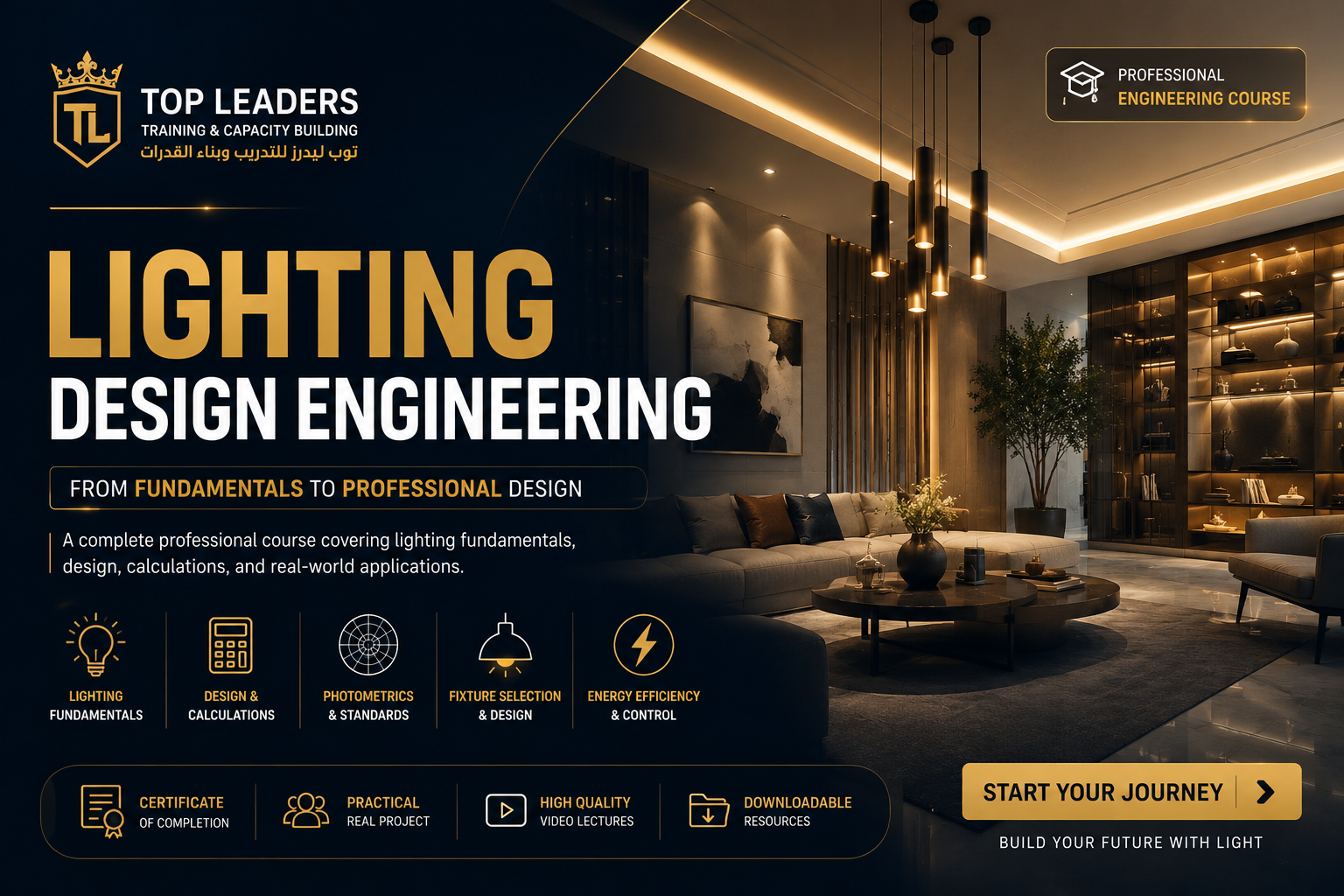
Lighting Design Engineering Course
Professional Lighting Engineering & Illumination Design Program
The Lighting Design Engineering Course is a comprehensive professional training program designed to provide engineers, architects, designers, and technical professionals with a complete understanding of modern lighting engineering, illumination systems, and professional lighting design methodologies according to international standards and real engineering practice.
This course covers the scientific, technical, architectural, and practical aspects of lighting systems design, starting from lighting fundamentals and photometric principles up to advanced lighting calculations, energy analysis, emergency lighting systems, and complete professional lighting project design.
The program combines:
- Engineering theory
- Practical applications
- Professional lighting calculations
- Real design workflows
- International lighting standards
- Lighting software concepts
- Interior & architectural lighting integration
to prepare trainees for professional lighting design in residential, commercial, hospitality, industrial, and architectural projects.
Course Main Topics
1️⃣ Fundamentals of Lighting Engineering
- Lighting concepts and principles
- Human visual fundamentals
- Photometric science basics
- Luminous flux, intensity, illuminance, and luminance
- Color temperature (CCT)
- Color rendering index (CRI)
- Lighting efficacy and efficiency
- Glare, reflection, and visual comfort
- Polar light distribution
2️⃣ Natural Lighting (Daylighting)
- Daylight concepts and benefits
- Side lighting and top lighting systems
- Skylights and daylight strategies
- Daylight calculations
- Daylight performance and energy efficiency
- Circadian lighting concepts
- Advanced daylighting applications
3️⃣ Artificial Lighting & Lamp Technologies
- Artificial lighting systems
- Lamp types and selection criteria
- Incandescent lamps
- Tungsten halogen lamps
- Fluorescent and CFL lamps
- HID lamps
- Metal halide lamps
- Sodium and mercury lamps
- LED, OLED, SSL, and advanced lighting technologies
4️⃣ Luminaires & Lighting Fixtures
- Luminaire classifications
- Decorative and architectural lighting fixtures
- Lighting fixture selection
- Installation methods
- IP ratings and protection levels
- Lighting control systems
- Smart and dimmable lighting systems
5️⃣ Professional Lighting Design
- Lighting design objectives
- Lighting quality and visual comfort
- Lighting design workflow
- Lighting layering and zoning
- Lighting distribution techniques
- Fixture arrangement and coordination
- Interior design integration
- Lighting control strategies
6️⃣ Lighting Calculations & Design Methods
- Lumen method calculations
- Utilization factor (UF)
- Maintenance factor (MF)
- Room index calculations
- Lighting estimation methods
- Manual lighting calculations
- Lighting distribution analysis
- Uniformity and glare analysis
7️⃣ Emergency & Outdoor Lighting
- Emergency lighting systems
- Exit signs and egress lighting
- Emergency lighting calculations
- Outdoor and landscape lighting
- Street and facade lighting
- Lighting energy allowance (LEA)
- Lighting power density (LPD)
8️⃣ Final Integrated Lighting Design Project
- Complete hotel lighting design project
- Step-by-step professional lighting design
- Fixture selection from catalogues
- Lighting fixture schedules
- Lighting load schedules
- Practical lighting calculations
- Professional project workflow
Course Features
✅ Comprehensive professional curriculum
✅ Real engineering applications
✅ Practical design methodology
✅ Lighting calculations and analysis
✅ International engineering concepts
✅ Architectural and decorative lighting integration
✅ Professional project-based learning
✅ Suitable for engineering students and professionals
Target Audience
- Electrical Engineers
- Architects
- Interior Designers
- MEP Engineers
- BIM Engineers
- Engineering Students
- Technical Designers
- Professionals interested in lighting systems
Learning Outcomes
By the end of this course, trainees will be able to:
- Understand lighting engineering fundamentals
- Select suitable lighting systems and fixtures
- Perform professional lighting calculations
- Design indoor and outdoor lighting systems
- Apply emergency lighting standards
- Integrate lighting with architectural design
- Analyze lighting quality and energy efficiency
- Prepare professional lighting layouts and schedules
- Develop complete lighting design projects
Course Level
Professional Engineering Level
Training Approach
Theory + Practical Applications + Design Calculations + Project-Based Learning
Institution
🏛 Top Leaders Training & Capacity Building
Professional Engineering Education & Capacity Building